How AI is Transforming Learning & Development in 2026
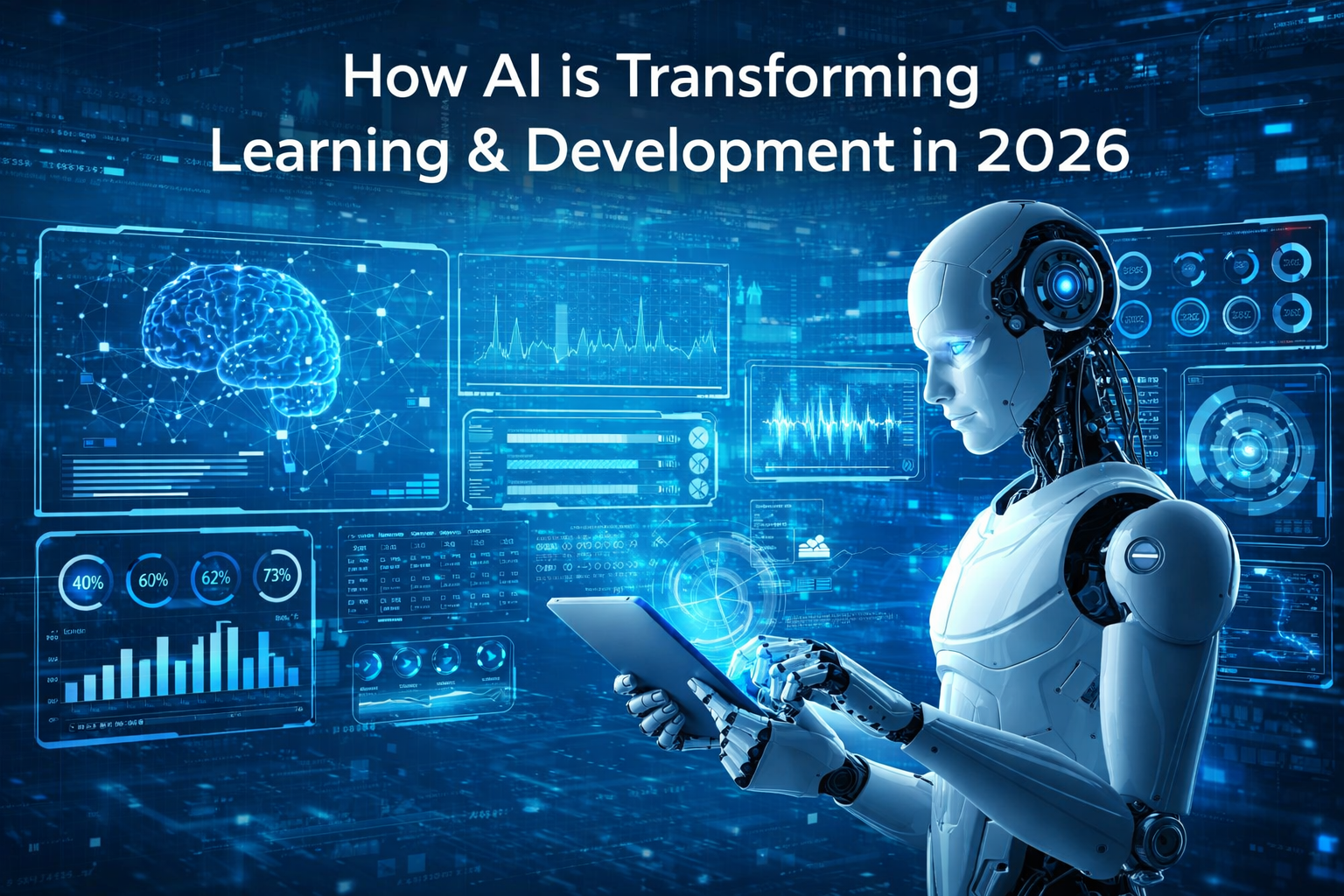
In 2026, Artificial Intelligence is no longer a futuristic concept in the workplace—it has become a core part of how organizations train, develop, and retain their employees. Learning and Development (L&D) has evolved from traditional classroom training and long e-learning modules to intelligent, personalized, and data-driven learning experiences. AI is transforming how employees learn, how companies train, and how organizations prepare for the future of work.
One of the biggest changes AI has brought to Learning and Development is personalization. Earlier, companies used to provide the same training program to all employees, regardless of their skill level, learning speed, or job role. This often made training ineffective because some employees found it too easy while others found it too difficult. In 2026, AI can analyze an employee’s performance, learning behavior, strengths, and weaknesses to create a personalized learning path. This means every employee gets training that is tailored specifically to their needs, making learning more effective and engaging.
AI is also transforming Learning Management Systems (LMS). Modern AI-powered LMS platforms can recommend courses, track employee progress, conduct assessments, and even suggest career development paths. These systems continuously collect and analyze data, helping organizations understand which training programs are working and which are not. This data-driven approach allows companies to invest in training programs that actually improve employee performance and productivity.
Another major transformation is the use of AI chatbots and virtual assistants in learning. Employees can now ask questions to AI learning assistants anytime and receive instant answers. These AI assistants act like 24/7 tutors, helping employees understand concepts, find learning resources, and solve problems. This has made learning more continuous rather than something that only happens during scheduled training sessions.
Automation is another area where AI is making a big impact in L&D. Many administrative tasks such as scheduling training sessions, sending reminders, grading assessments, and generating reports are now automated using AI. This reduces the workload of HR and L&D teams, allowing them to focus more on strategy, employee development, and creating better learning programs rather than doing repetitive administrative work.
AI is also making corporate training more interactive and practical. Technologies like Virtual Reality (VR), Augmented Reality (AR), and simulation-based training are being integrated with AI to create immersive learning experiences. For example, employees can practice real-life scenarios such as customer interactions, machine operations, or safety procedures in a virtual environment. AI tracks their performance and provides feedback, helping them improve without real-world risks.
Despite all these advantages, there are still some challenges in implementing AI in Learning and Development. The cost of AI technology, data privacy concerns, and the need for technical infrastructure are some of the major challenges organizations face. Additionally, some employees and trainers may resist adopting new technologies due to lack of technical knowledge or fear of change. However, as technology becomes more affordable and digital skills improve, these challenges are gradually reducing.
Looking ahead, the future of AI in Learning and Development is very promising. We are moving towards a future where AI will act as a personal career coach for employees, suggesting what skills to learn, which courses to take, and which career path to choose. AI will continuously track industry trends and help employees learn the right skills at the right time. This will help organizations build a highly skilled and future-ready workforce.