Businesses rush to rehire staff after regretted AI-driven cuts
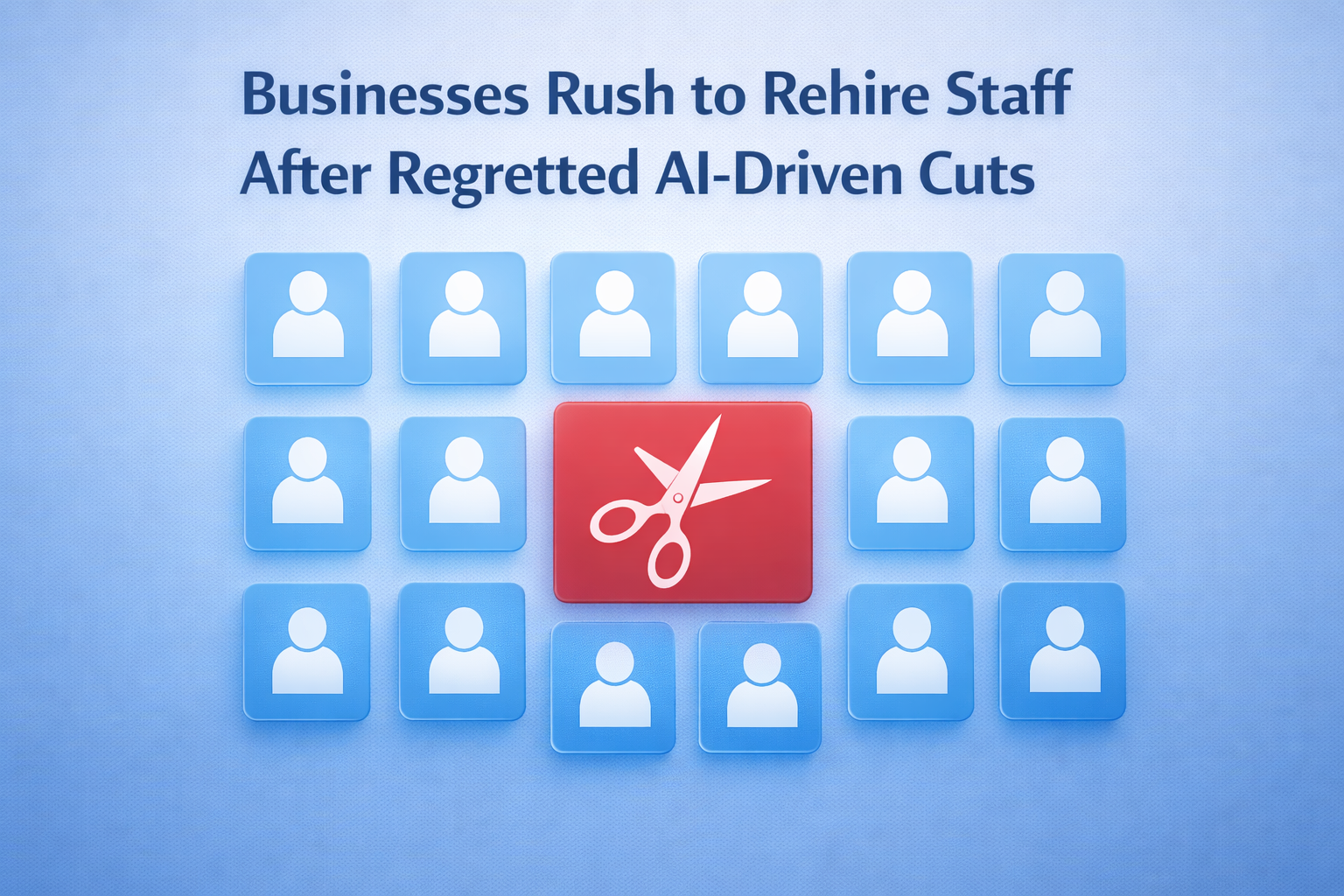
Many employers that reduced their workforce due to artificial intelligence are now rehiring some of the employees they previously laid off, with many HR leaders admitting they regret how the AI-led layoffs were handled. This is according to a new study by Careerminds, which surveyed 600 HR professionals in February 2026 who had carried out layoffs in the past year.
The study found that 32.7% of organisations that implemented AI-related layoffs have already rehired between 25% and 50% of the roles they initially eliminated. Another 35.6% reported that they had rehired more than half of the roles they had cut.
Rehiring also happened relatively quickly. More than half of HR leaders (52.1%) said they rehired for previously eliminated roles within six months. Around 17.8% began rebuilding their workforce within three months, while only 2.1% waited more than a year before rehiring.
AI Layoffs Did Not Go as Planned
The findings suggest that many organisations underestimated the human input required when implementing AI. More than half of HR leaders said AI still required more human involvement than they had expected. Additionally, over 20% reported that their AI tools underperformed or did not deliver the expected results.
Only 21.4% of respondents said AI fully replaced roles without any operational issues. Meanwhile, 66.1% said only some roles were successfully replaced through automation.
The layoffs also resulted in the loss of important skills and expertise, according to about one-third of HR leaders. More than a quarter said their remaining employees did not have the necessary skills to fill the gaps left by laid-off workers.
Organisations Would Handle AI Layoffs Differently
The report also revealed that many HR leaders would change their approach if they had the chance to make the decision again. About 41.2% said they would handle AI-driven layoffs differently, while 50.3% said they would make selective changes, such as being more careful about which roles were eliminated.
More than half of HR leaders said that up to 25% of the roles made redundant could have been moved into different roles if proper redeployment support had been provided. Another 28.3% said that between 26% and 50% of roles had the potential to be redeployed rather than eliminated.
However, despite this potential, 55.1% of organisations said reskilling and redeployment were not formally discussed or considered before layoffs were made.
HR leaders also said that better understanding of AI capabilities would have helped them make better decisions. Around 40% said having more data on employee skills and capabilities would have improved decision-making, while one-third said the ability to test workforce change scenarios before implementing layoffs would have made a significant difference.
A Lesson for Organisations
The findings highlight an important lesson for organisations adopting AI: workforce transformation should be carefully planned. Rather than immediately replacing roles, companies may benefit more from reskilling employees, redeploying talent, and gradually integrating AI into workflows.
The study suggests that while AI can improve productivity and efficiency, human skills, experience, and judgment remain critical in many roles — and organisations that balance AI adoption with workforce development are likely to achieve better long-term results.