How HR Analytics Helps in Better Decision Making
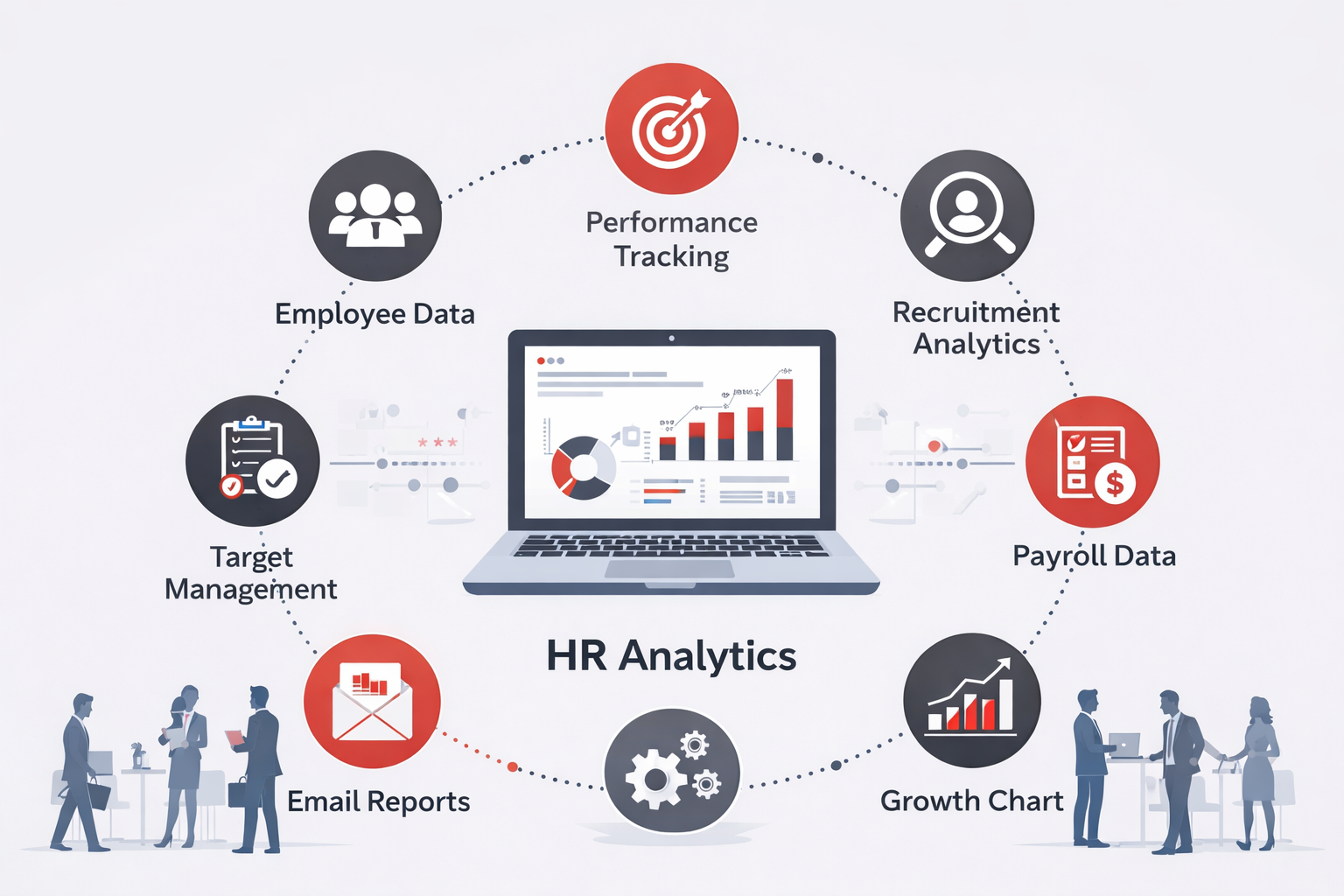
In modern organizations, Human Resource (HR) departments are no longer limited to administrative tasks such as payroll, attendance, and recruitment. Today, HR plays a strategic role in business growth, and one of the most important tools helping HR departments make better decisions is HR Analytics. HR analytics, also known as people analytics, is the process of collecting, analyzing, and interpreting employee data to improve workforce management and business performance.
HR analytics helps organizations move from guesswork to data-driven decision-making. Instead of making decisions based on assumptions, HR managers can use real data to understand employee performance, engagement, retention, and productivity.
What is HR Analytics?
HR analytics is the use of data and statistical methods to analyze employee-related information such as attendance, performance, recruitment, training, employee satisfaction, and turnover. This data is used to identify patterns, trends, and problems in the organization.
For example, HR analytics can help answer questions such as:
- Why are employees leaving the company?
- Which employees are performing well?
- Which recruitment sources provide the best candidates?
- Which departments have high absenteeism?
- How effective are training programs?
By answering these questions, HR analytics helps management make better business decisions.
Areas Where HR Analytics Helps in Decision Making
1. Recruitment and Hiring
HR analytics helps companies identify which recruitment sources (job portals, referrals, campus placements) provide the best employees. It also helps HR teams analyze candidate data and select candidates who are more likely to perform well and stay longer in the company.
2. Employee Performance Management
HR analytics helps track employee performance using performance data, KPIs, and appraisal records. Managers can identify high-performing employees and employees who need training or support.
3. Employee Retention
One of the biggest challenges for companies is employee turnover. HR analytics helps identify the reasons why employees leave the company. For example, low salary, poor management, lack of growth opportunities, or high workload. Companies can use this data to improve employee retention strategies.
4. Training and Development
HR analytics helps organizations measure the effectiveness of training programs. Companies can analyze whether training programs improve employee performance and productivity.
5. Attendance and Productivity Analysis
HR analytics helps track employee attendance, absenteeism, overtime, and productivity. This helps companies identify departments with productivity issues and take corrective action.
6. Workforce Planning
HR analytics helps organizations plan their workforce by analyzing future workforce needs. Companies can predict how many employees they need to hire, what skills are required, and which departments need more staff.
Benefits of HR Analytics
One of the biggest benefits of HR analytics is better decision-making. Managers can make decisions based on data instead of assumptions.
Another benefit is cost reduction. HR analytics helps reduce hiring costs, training costs, and employee turnover costs.
HR analytics also improves employee performance because managers can identify problems and provide training and support.
It also helps in risk management. HR analytics can identify risks such as high employee turnover, low employee satisfaction, or skill shortages.
HR analytics also improves strategic planning because HR data helps management plan business expansion and workforce requirements.
Types of HR Analytics
There are four main types of HR analytics:
- Descriptive Analytics – Shows what happened in the past (e.g., last year’s employee turnover rate).
- Diagnostic Analytics – Explains why something happened (e.g., why employees are leaving).
- Predictive Analytics – Predicts what may happen in the future (e.g., which employees may leave the company).
- Prescriptive Analytics – Suggests what actions should be taken (e.g., strategies to improve employee retention).
Challenges in HR Analytics
Although HR analytics has many benefits, there are some challenges. One major challenge is data quality. If the data is incorrect or incomplete, the analysis will be wrong.
Another challenge is data privacy and security. Employee data is sensitive, so companies must protect it properly.
Some organizations also lack skilled employees who can analyze HR data and use analytics tools.
Tools Used for HR Analytics
Some commonly used HR analytics tools include:
- HRMS (Human Resource Management Systems)
- Power BI
- Tableau
- Excel
- Google Data Studio
- SAP SuccessFactors
- Workday
These tools help HR teams create reports, dashboards, and data visualizations for better decision-making.