How Predictive Analytics is Changing Workforce Planning
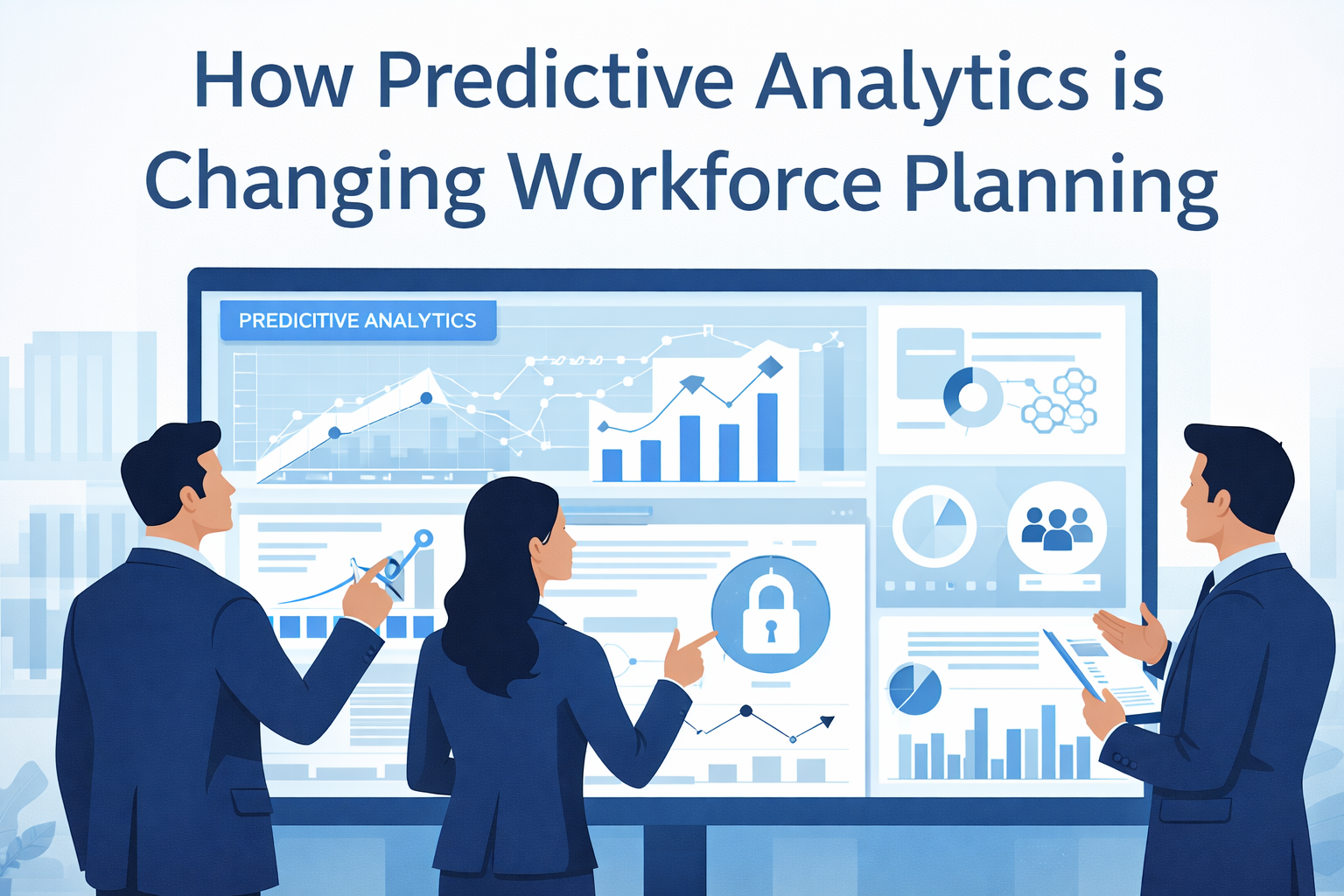
“Workforce planning has always been an important part of Human Resource management, but in the past, it was mostly based on assumptions, past experiences, and basic data. HR managers would look at previous hiring trends, employee turnover rates, and business growth to estimate how many employees the company would need in the future. However, this traditional approach was not always accurate and often led to overstaffing or understaffing. Today, predictive analytics is changing workforce planning by helping organizations make data-driven decisions.
Predictive analytics uses historical data, artificial intelligence, and statistical algorithms to predict future outcomes. In HR, predictive analytics is used to forecast hiring needs, predict employee turnover, identify skill gaps, and plan workforce requirements more accurately. Instead of guessing future workforce needs, companies can now use data to make smarter workforce planning decisions.
One of the biggest advantages of predictive analytics in workforce planning is demand forecasting. Companies can analyze past data such as seasonal workload, sales growth, project demands, and business expansion plans to predict how many employees will be needed in the future. For example, retail companies can predict the number of employees required during festival seasons, and IT companies can predict hiring needs based on upcoming projects.
Predictive analytics is also helping companies reduce employee turnover. Employee turnover is expensive and affects productivity. Predictive analytics systems can analyze employee data such as attendance, performance, engagement levels, promotion history, and salary data to identify employees who are at risk of leaving the organization. HR teams can then take preventive actions such as offering training, promotions, salary increments, or role changes to retain employees.
Another important area is skill gap analysis. Companies need employees with the right skills to remain competitive. Predictive analytics can analyze current employee skills, performance data, and future business requirements to identify skill gaps in the organization. HR teams can then plan training and development programs to prepare employees for future roles.
Predictive analytics also improves recruitment planning. Instead of hiring urgently when a position becomes vacant, companies can predict future hiring needs and start recruitment earlier. This reduces hiring pressure and helps companies find better candidates.
Workforce scheduling is another area where predictive analytics is useful. Companies can predict busy periods and schedule employees accordingly. This is especially useful in industries like healthcare, retail, customer support, and manufacturing where workload changes frequently.
Predictive analytics also supports succession planning. Organizations can identify employees who have the potential to become future leaders based on their performance, skills, experience, and leadership qualities. HR teams can then provide leadership training and career development programs to prepare these employees for future management roles.
However, predictive analytics in workforce planning also has some challenges. One of the main challenges is data quality. Predictive analytics works only if the data is accurate and well-organized. If companies use incorrect or incomplete data, the predictions will also be incorrect.
Another challenge is data privacy and ethics. Predictive analytics systems use employee data, and companies must ensure that this data is used responsibly and ethically. Employees should be informed about how their data is being used.
There is also a need for skilled HR professionals who can understand and use predictive analytics tools. HR teams need training to understand HR analytics dashboards, reports, and predictions.
Despite these challenges, predictive analytics is becoming an essential tool for modern workforce planning. Companies that use predictive analytics can reduce hiring costs, improve employee retention, plan training programs, and manage workforce requirements more effectively.”