HR Automation – The Future of Human Resource Management
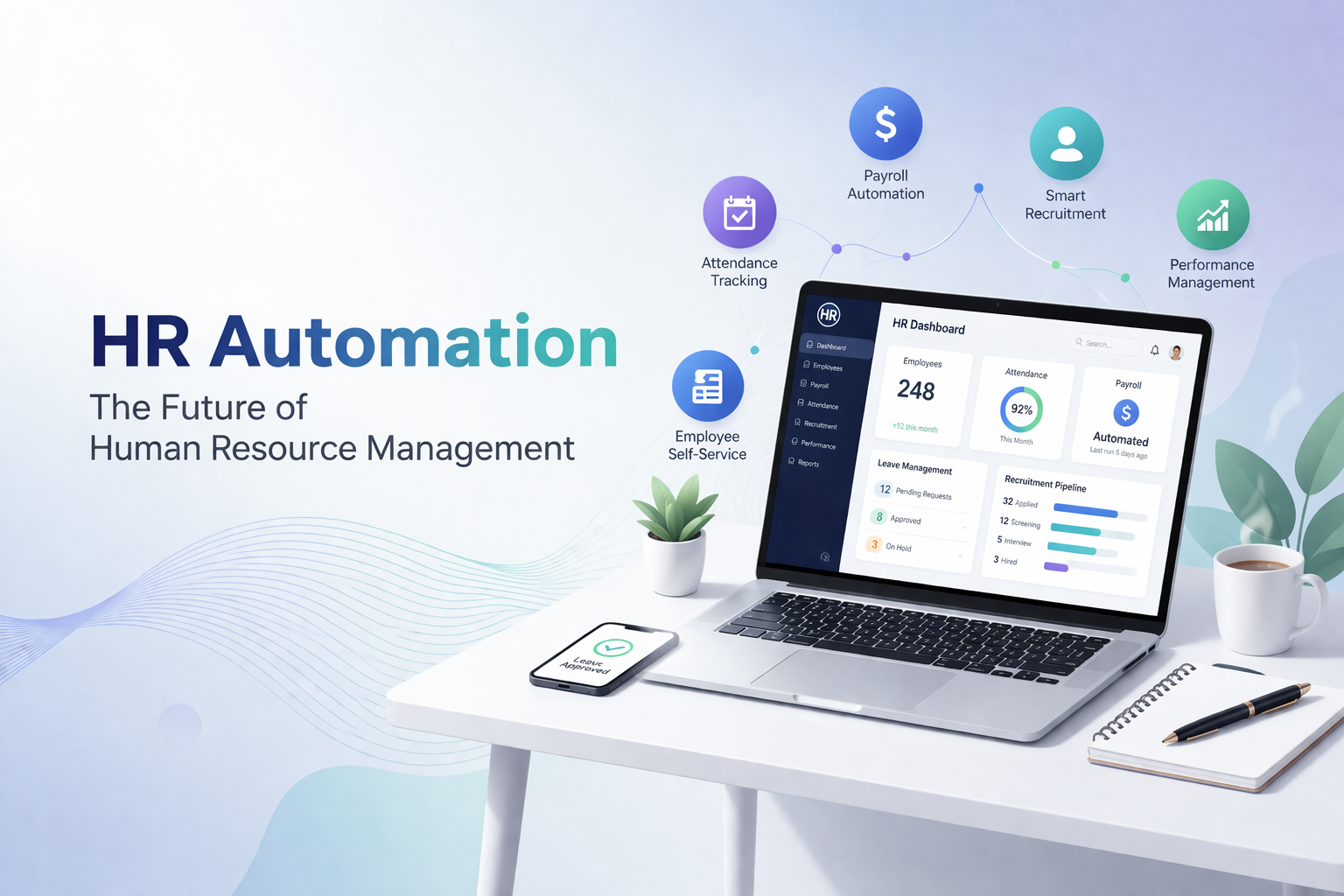
In today’s digital world, organizations are increasingly adopting technology to improve efficiency and productivity. One of the biggest changes in the corporate world is the adoption of HR automation. HR automation refers to the use of software and technology to automate repetitive and time-consuming human resource tasks such as payroll, attendance, recruitment, employee records, and performance management. In 2026, HR automation is becoming an essential part of modern organizations because it helps companies save time, reduce errors, and improve employee management.
What is HR Automation?
HR automation is the process of using HR software or Human Resource Management Systems (HRMS) to perform HR tasks automatically. Instead of managing employee records on paper or spreadsheets, companies now use digital systems to manage all HR activities in one place. HR automation helps HR departments manage employee data, salaries, attendance, leave requests, and performance reports more efficiently.
How HR Automation is Changing HR
HR automation is changing the way HR departments work. Earlier, HR staff spent most of their time doing administrative work such as maintaining employee records, calculating salaries, and tracking attendance. Now, with automation, these tasks are handled by software. This allows HR professionals to focus more on important tasks such as employee engagement, training and development, and strategic planning. HR automation is making HR departments more strategic rather than administrative.
Key Areas Where HR Automation is Used
HR automation is used in many areas of human resource management. One of the most common areas is payroll management, where software automatically calculates salaries, taxes, and deductions. Another area is attendance management, where employee attendance is tracked using biometric systems or online attendance software. HR automation is also used in recruitment, where software helps in resume screening, interview scheduling, and candidate communication. In addition, employee onboarding, leave management, and performance evaluation are also automated using HR systems.
Benefits of HR Automation
HR automation provides many benefits to organizations. It reduces paperwork and manual data entry, which minimizes errors. It saves time and increases productivity because HR staff do not have to perform repetitive tasks manually. HR automation also improves data accuracy and makes it easier to generate reports. Employees can apply for leave, check their salary details, and update their information using self-service portals, which improves employee satisfaction. Overall, HR automation helps companies manage their workforce more efficiently.
Challenges of HR Automation
Although HR automation has many advantages, there are some challenges as well. Companies need to invest money in HR software and training. Employees and HR staff need time to learn how to use new systems. There are also concerns about data security and privacy because employee information is stored digitally. Therefore, companies must use secure HR systems and protect employee data.
Future of HR Automation
The future of HR automation is very promising. In the coming years, HR automation will become more advanced with the use of Artificial Intelligence and data analytics. AI will help in smart recruitment, employee performance prediction, and employee engagement analysis. HR automation will continue to grow as companies move towards digital transformation.