HR Data Privacy in the Age of AI and Analytics
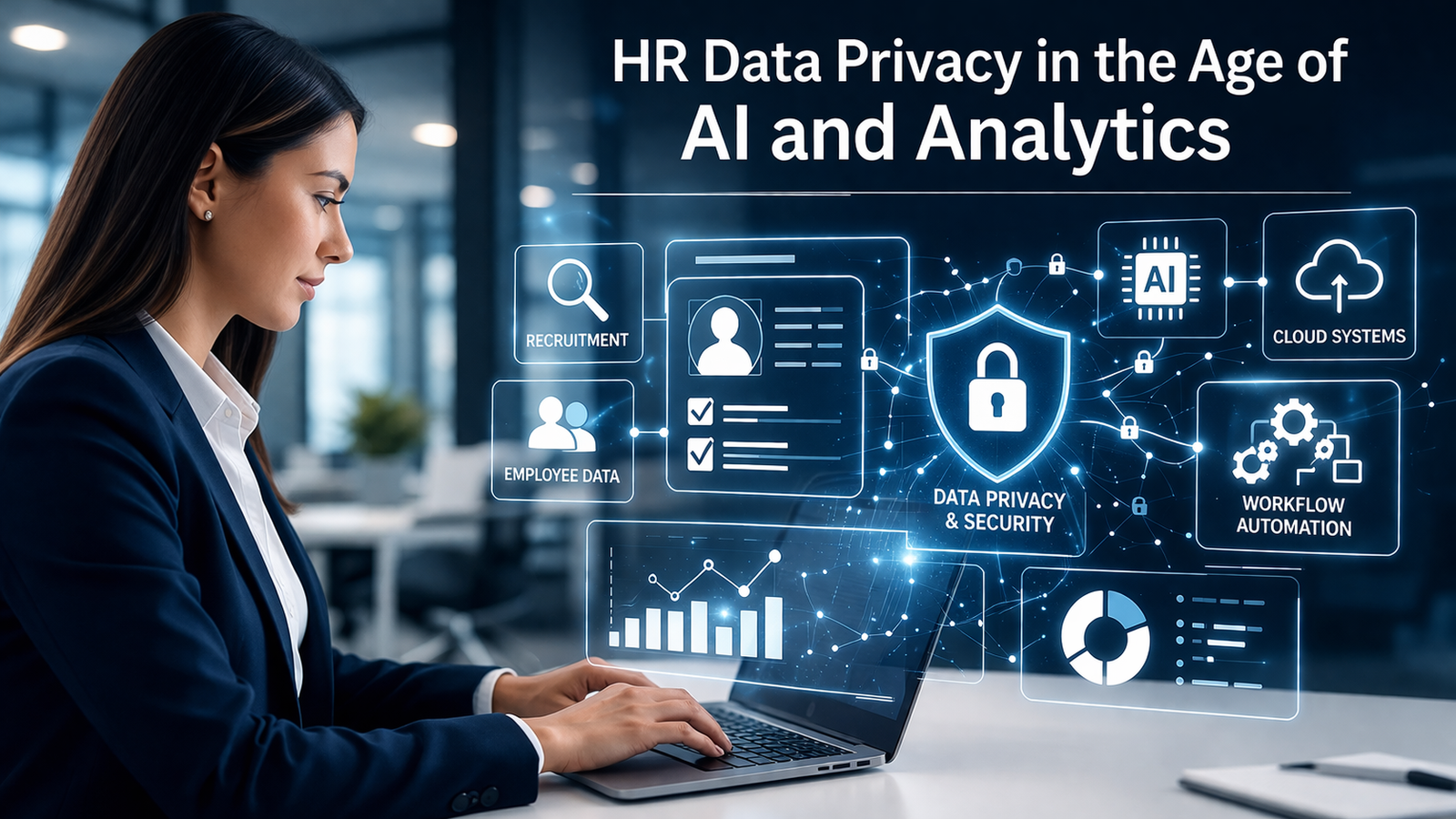
“In today’s digital workplace, data has become one of the most valuable assets for organizations. Human Resources departments collect and manage a large amount of employee data, including personal information, salary details, performance records, attendance, health information, and feedback data. With the rise of artificial intelligence and HR analytics, organizations are now using this data to make smarter decisions related to hiring, performance management, employee engagement, and workforce planning. However, as the use of data increases, the importance of HR data privacy has also become a major concern.
HR data privacy refers to the protection of employee personal and professional information from unauthorized access, misuse, or data breaches. In the age of AI and analytics, HR systems collect more data than ever before. AI systems analyze employee behavior, communication patterns, performance trends, and engagement levels. While this helps organizations improve decision-making, it also creates risks related to data security and employee privacy.
One of the biggest challenges in HR data privacy is the amount of data being collected. Many organizations collect more employee data than necessary. For example, AI tools may track employee login time, system usage, email patterns, and communication behavior to measure productivity. If this data is not handled properly, it can create privacy concerns and reduce employee trust.
Another major issue is data security. HR databases contain sensitive information such as bank details, addresses, identification documents, and salary information. If this data is leaked or hacked, it can cause serious problems for both employees and organizations. Therefore, companies must invest in strong cybersecurity systems such as data encryption, secure servers, multi-factor authentication, and access control systems.
Transparency is also very important in HR data privacy. Employees should know what data is being collected, why it is being collected, and how it will be used. Organizations should create clear data privacy policies and communicate them to employees. When employees trust that their data is being used responsibly, they are more comfortable with HR analytics and AI systems.
Another important aspect of HR data privacy is legal compliance. Different countries have different data protection laws and companies must follow these laws when collecting and storing employee data. Organizations must ensure that employee data is stored securely, used only for official purposes, and not shared without permission.
AI also creates new privacy challenges. AI systems make decisions based on employee data, such as performance ratings, promotion recommendations, and hiring decisions. If AI systems are not designed properly, they may create bias or unfair decisions. Organizations must ensure that AI systems are transparent, fair, and regularly monitored.
Data access control is another important factor in HR data privacy. Not every employee in the organization should have access to all HR data. Access should be limited based on roles and responsibilities. For example, payroll data should be accessible only to authorized HR and finance staff.
Organizations should also provide data privacy training to employees and HR staff. Many data breaches happen because of human errors such as weak passwords, phishing emails, or sharing confidential information. Training employees about cybersecurity and data privacy can reduce these risks.
In the future, HR data privacy will become even more important as companies continue to use AI, machine learning, and people analytics. Organizations will need to balance the benefits of data analytics with the responsibility of protecting employee privacy. Companies that handle employee data responsibly will build trust, improve employee satisfaction, and maintain a strong organizational reputation.”