Importance of HR Analytics in Modern Companies
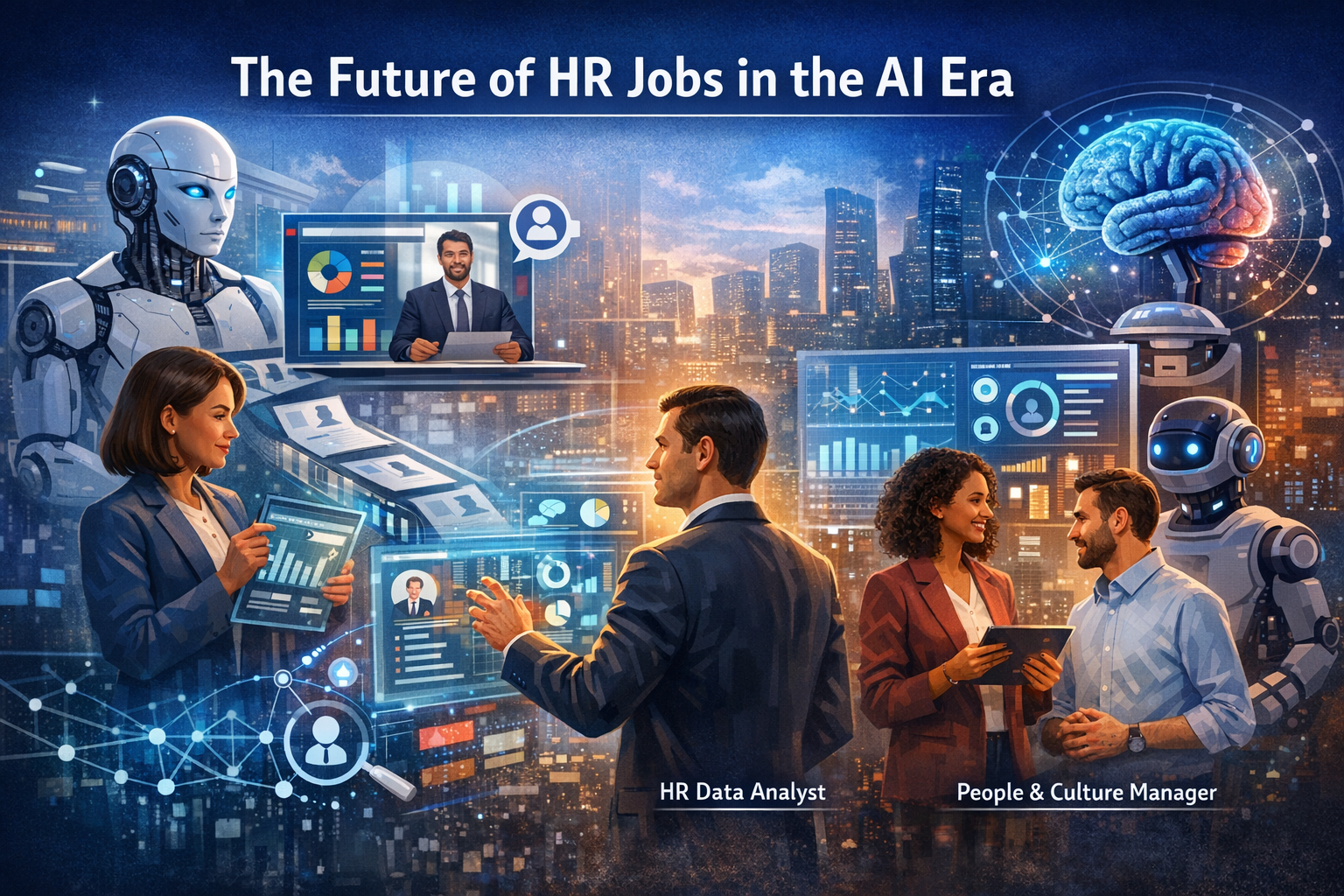
The future of HR jobs in the AI era is not about machines replacing humans, but about machines changing how humans work. Artificial Intelligence is transforming the Human Resource function from a traditional administrative department into a strategic and technology-driven department. Earlier, HR professionals spent a large amount of time on routine tasks such as sorting resumes, maintaining employee records, managing attendance, processing payroll, and scheduling interviews. These tasks were repetitive and time-consuming. With the introduction of AI and automation tools, many of these tasks can now be completed in minutes instead of hours. This allows HR professionals to focus more on strategic and people-oriented activities that add real value to the organization.
One of the biggest changes AI is bringing to HR is data-driven decision-making. Modern companies no longer rely only on guesswork or experience when making HR decisions. They use HR analytics and AI tools to analyze employee performance, productivity, attendance patterns, employee satisfaction, and turnover rates. With the help of this data, HR managers can identify which employees are likely to leave the company, which employees need training, which departments have performance issues, and what type of candidates should be hired. This makes HR more scientific and accurate, and companies can make better decisions that improve overall performance.
Recruitment and hiring are also changing rapidly because of AI. In the past, HR professionals had to read hundreds of resumes manually to find suitable candidates. Now AI-based recruitment systems can scan thousands of resumes in a few seconds and shortlist the best candidates based on skills, qualifications, and experience. Some companies are also using AI chatbots to conduct initial interview rounds, ask basic questions, and evaluate candidate responses. This makes the recruitment process faster, reduces hiring costs, and helps companies find the right talent more efficiently. However, HR professionals are still needed to conduct final interviews, evaluate personality, and make final hiring decisions because human judgment is very important in hiring.
As AI continues to grow, new job roles are being created in the HR field. Traditional HR roles are evolving into more specialized roles such as HR Data Analyst, People Analytics Specialist, HR Technology Manager, Talent Management Specialist, and Employee Experience Manager. These roles require knowledge of HR as well as technology and data analysis. This means the future HR professional will not only manage people but will also work with data, software, and AI tools to improve organizational performance.
Even in the AI era, human skills will remain very important. AI can analyze data and automate tasks, but it cannot understand human emotions, workplace relationships, leadership challenges, or employee motivation in the same way humans can. HR professionals play a very important role in conflict management, employee engagement, leadership development, organizational culture building, and communication between management and employees. These are human-centered tasks that require emotional intelligence, communication skills, and decision-making ability. Because of this, HR will become more focused on people rather than paperwork.
Another important aspect of the future of HR is continuous learning and upskilling. HR professionals will need to learn new technologies and tools to stay relevant in the industry. Skills such as HR analytics, basic knowledge of Artificial Intelligence, data analysis, HR software systems like Workday or SAP, and data visualization tools like Power BI will become very important. HR professionals who upgrade their skills and learn new technologies will have more career opportunities and better job growth in the future.
The future of HR jobs is therefore not in danger, but it is changing. AI will handle repetitive and administrative work, while HR professionals will focus on strategic planning, employee development, workplace culture, and decision-making. Companies will need HR professionals who understand both people and technology. The combination of human skills and technological knowledge will define successful HR professionals in the AI era.