Learning in the Flow of Work: The Smartest Way to Train Employees
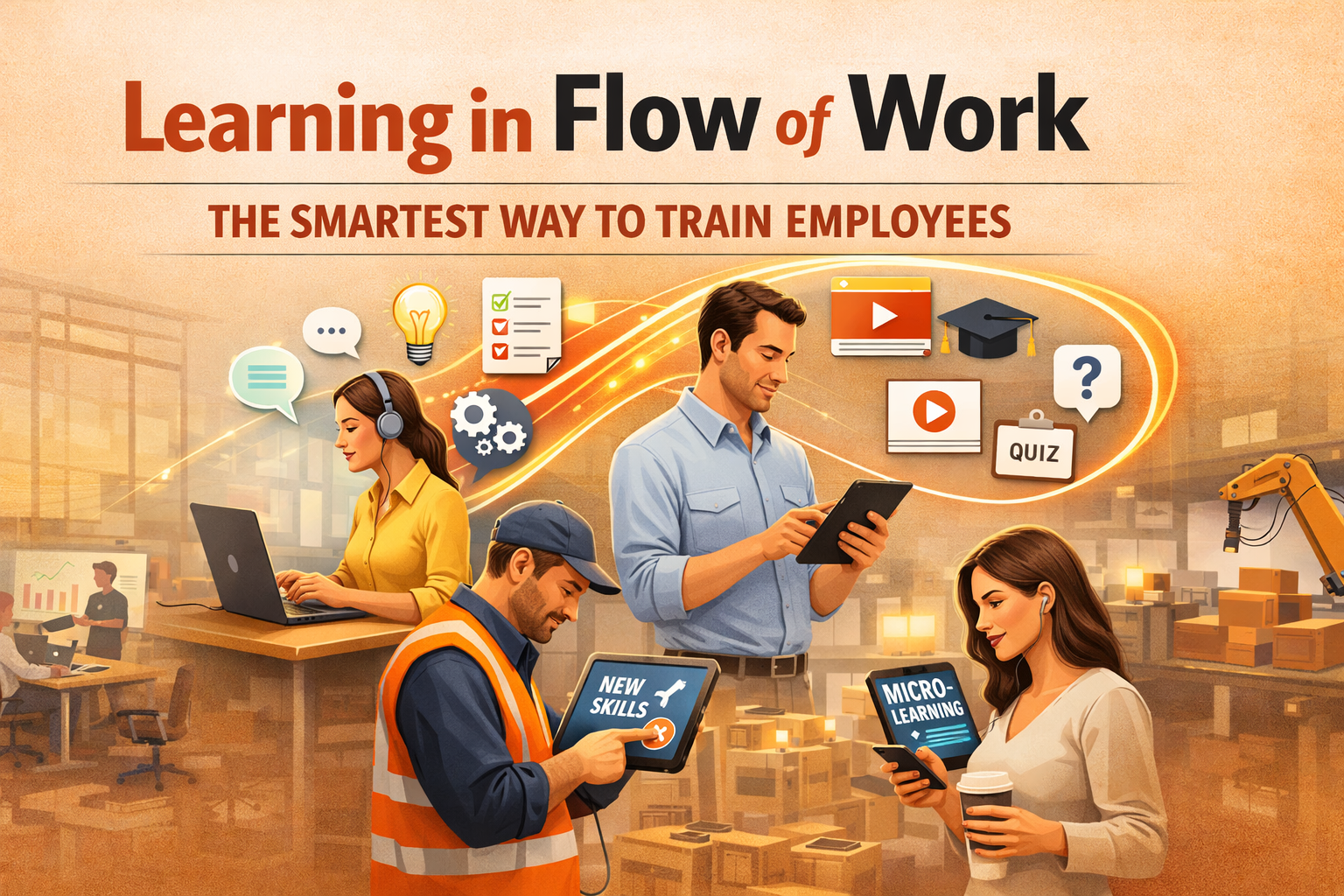
In today’s fast-changing business world, organizations are realizing that traditional training methods are no longer enough to keep employees skilled and productive. Employees often attend long training sessions, but after a few days, much of the information is forgotten or never applied in real work. This is why companies are now focusing on a modern approach called “Learning in the Flow of Work.” In 2026, this has become one of the smartest and most effective ways to train employees.
Learning in the flow of work means employees learn while they are working, instead of stopping work to attend training. The learning happens during real tasks, real projects, and real problem-solving situations. Instead of separate training sessions, learning becomes a part of daily work. This approach helps employees learn faster and apply knowledge immediately.
For example, imagine an employee working on a software tool and facing a problem. Instead of attending a one-hour training session, the employee can watch a 5-minute tutorial, read a quick guide, or get help from an AI assistant at that moment. This is learning in the flow of work—learning exactly when it is needed.
One of the biggest advantages of this approach is that it improves productivity and performance. Employees do not have to leave their work for long training sessions. They can learn small things quickly and continue their work. This saves time and helps employees solve problems faster. Learning becomes more practical and relevant because it is connected directly to the job.
Technology plays a very important role in learning in the flow of work. AI-powered learning platforms, chatbots, knowledge bases, and microlearning modules help employees access information instantly. Many companies are integrating learning tools directly into work platforms like email, project management tools, CRM systems, and communication platforms. This allows employees to learn without switching between different systems.
Another important benefit is continuous learning. Traditional training happens once or twice a year, but learning in the flow of work happens every day. Employees keep learning new skills while working, which helps them grow continuously. This also helps organizations build a learning culture where learning is a daily activity, not a one-time event.
This approach is also more personalized. Different employees face different problems in their work, so they learn different skills based on their needs. This makes learning more relevant and useful compared to traditional training programs where everyone learns the same thing.
However, implementing learning in the flow of work requires proper planning. Companies need to create short learning content, integrate learning systems with work tools, and encourage employees to use learning resources regularly. Managers also need to support continuous learning and guide employees when needed.