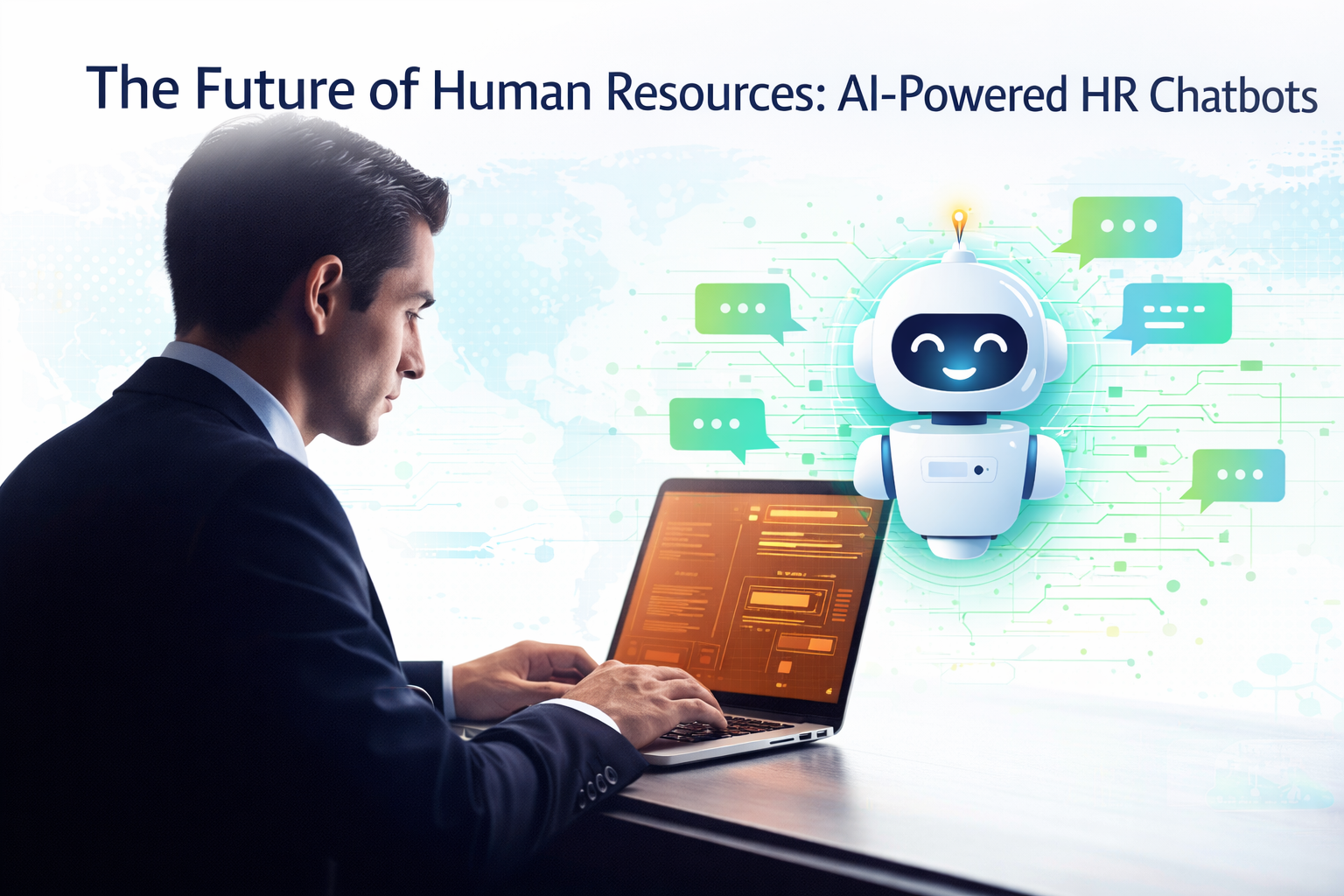
The Future of Human Resources: AI-Powered HR Chatbots
“Human Resource departments handle a large number of employee queries every day. Employees often contact HR for information related to leave policies, salary details, company rules, benefits, attendance, and many other topics. Responding to these queries manually takes a lot of time and effort, especially in large organizations. To solve this problem, many companies are now using HR chatbots to automate employee communication and HR support services.
HR chatbots are AI-powered virtual assistants that can communicate with employees through chat interfaces such as company portals, mobile apps, or messaging platforms. These chatbots can answer employee questions, provide information, guide employees through HR processes, and automate routine HR tasks. HR chatbots are becoming an important part of modern HR technology.
One of the biggest benefits of HR chatbots is 24/7 availability. Employees can ask questions at any time, and the chatbot can provide instant responses. Employees do not have to wait for HR office hours to get answers to simple questions. This improves employee satisfaction and reduces HR workload.
HR chatbots also help automate repetitive tasks. For example, chatbots can help employees apply for leave, check leave balance, download salary slips, check attendance records, and access company policies. Instead of sending emails to HR, employees can simply chat with the chatbot and complete these tasks quickly.
Another important benefit is faster onboarding. HR chatbots can guide new employees through the onboarding process by providing company information, training schedules, policy documents, and answering common questions. This makes the onboarding process smooth and organized.
HR chatbots also improve employee engagement. Chatbots can send reminders for training programs, performance reviews, meetings, and company events. They can also collect employee feedback through surveys and polls. This helps HR teams understand employee satisfaction and engagement levels.
HR chatbots can also support recruitment. Recruitment chatbots can answer candidate questions, collect candidate information, schedule interviews, and provide application status updates. This improves candidate experience and reduces recruitment workload.
Despite these benefits, HR chatbots also have some challenges. One of the main challenges is that chatbots cannot fully replace human interaction. Some HR issues such as conflict resolution, emotional support, and complex employee problems require human HR professionals. Chatbots can handle basic queries, but human HR is still necessary.
Another challenge is the accuracy of chatbot responses. If chatbots are not properly trained, they may provide incorrect or confusing information. Organizations must regularly update chatbot knowledge bases and monitor chatbot performance.
Data privacy is another concern. HR chatbots handle sensitive employee data such as salary information, personal details, and company policies. Organizations must ensure that chatbot systems are secure and protect employee data.
There is also a challenge related to employee acceptance. Some employees may not feel comfortable talking to a chatbot, especially older employees who are not familiar with new technology. Companies must provide training and awareness programs to help employees use chatbots effectively.
Looking at the future, HR chatbots are expected to become more advanced with artificial intelligence and natural language processing. Future HR chatbots will be able to understand employee emotions, provide personalized career advice, recommend training programs, and support employee well-being. Chatbots may also integrate with other HR systems such as payroll, attendance, and performance management systems to provide complete HR support.”