The Future of Recruitment: Talent Acquisition Strategies That Work
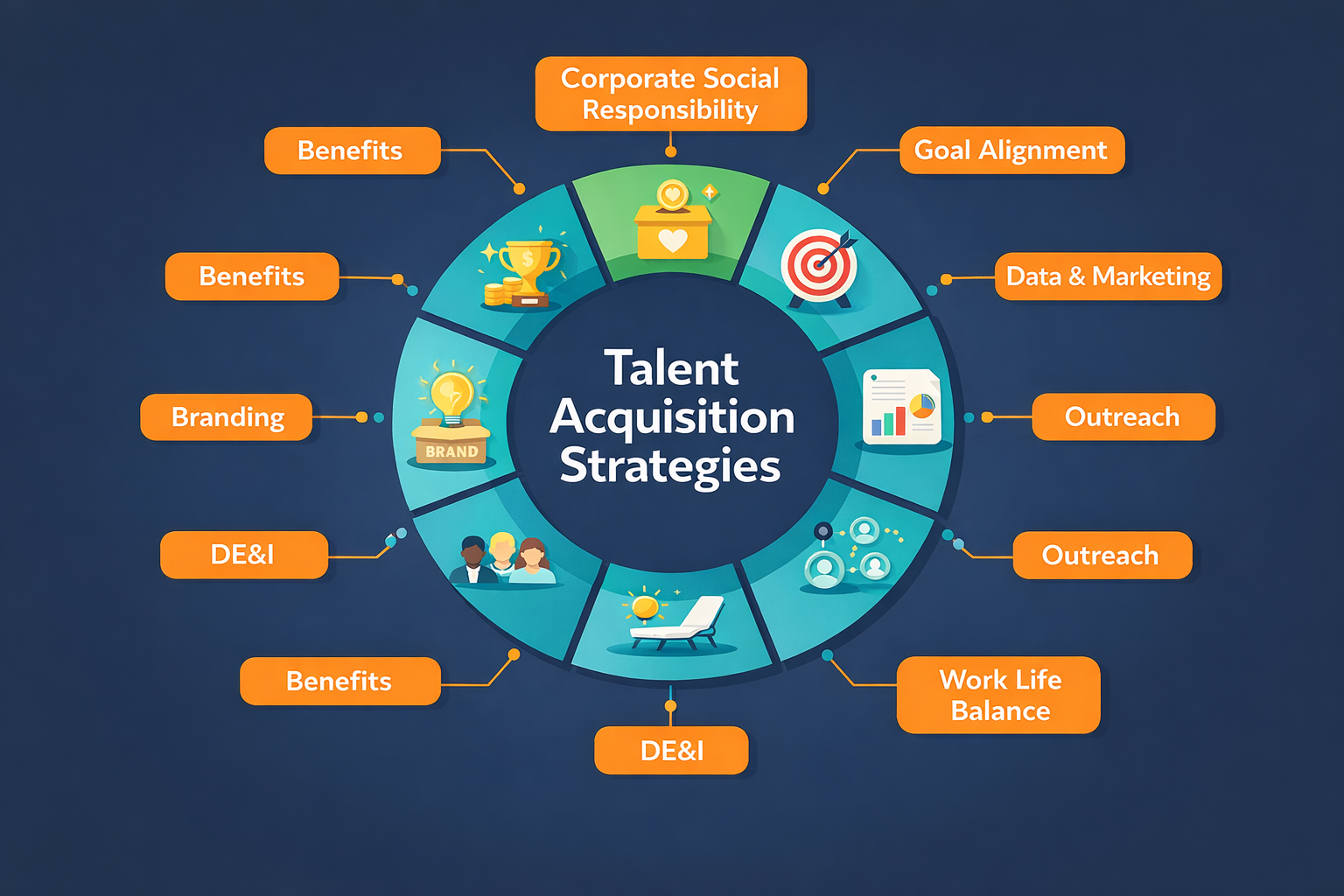
Recruitment is no longer just about posting job openings and waiting for candidates to apply. The future of recruitment is evolving into a more strategic, technology-driven, and people-focused function known as talent acquisition. In today’s competitive job market, organizations are not just looking to fill vacancies; they are looking to build strong, skilled, and future-ready teams. Talent acquisition strategies that work in 2026 are those that combine technology, data, employer branding, and a strong focus on candidate experience.
One of the most important talent acquisition strategies that works today is building a strong talent pipeline instead of hiring only when there is a vacancy. In the past, companies used to start hiring only when an employee left or when a new position was created. This often caused delays and rushed hiring decisions. Modern organizations continuously build a talent pipeline by connecting with potential candidates through LinkedIn, job portals, networking events, internships, and employee referrals. This ensures that when a job opening arises, the company already has a list of potential candidates ready. This strategy reduces time to hire and improves the quality of hiring.
Another important strategy is using data-driven recruitment. Companies are now using HR analytics and recruitment data to make better hiring decisions. Instead of relying only on intuition, recruiters analyze data such as time to hire, cost per hire, source of hire, candidate drop-off rate, and employee performance after hiring. This helps companies understand which recruitment methods are working and which are not. Data-driven recruitment helps organizations optimize their hiring process, reduce costs, and improve the overall effectiveness of recruitment.
Technology is also playing a major role in the future of recruitment. Artificial intelligence and automation are helping recruiters automate repetitive tasks such as resume screening, interview scheduling, and candidate communication. This saves time and allows recruiters to focus on strategic activities such as interviewing, relationship building, and employer branding. AI tools can also help in candidate matching by identifying candidates whose skills match job requirements. In the future, recruitment will become more automated, but human decision-making will still remain important because hiring is not just about skills but also about attitude, communication, and cultural fit.
Employer branding is another talent acquisition strategy that works very effectively. Today, candidates do not just apply for jobs; they apply for companies. Before applying, candidates research the company’s work culture, employee reviews, salary structure, career growth opportunities, and management style. If a company has a strong employer brand, it attracts more candidates and better candidates. Companies are now investing in career websites, social media presence, employee testimonials, and workplace culture videos to attract talent. Employer branding helps organizations reduce hiring costs and improve employee retention because candidates who join the company already have a positive perception of the organization.
Candidate experience is also becoming a key part of recruitment strategy. In a competitive job market, candidates often receive multiple job offers, so the company that provides the best hiring experience often hires the best candidates. Candidate experience includes the job application process, communication with recruiters, interview experience, and feedback process. Companies that respond quickly, communicate clearly, and respect candidates’ time create a positive impression. Even candidates who are not selected may recommend the company to others if they have a good experience during the hiring process.
Skills-based hiring is also an important recruitment strategy that works in the modern job market. Many companies are moving away from degree-based hiring and focusing more on skills and practical knowledge. Employers are using skill assessments, case studies, technical tests, and project-based interviews to evaluate candidates. This helps companies hire candidates who can actually perform the job rather than candidates who only have theoretical knowledge. Skills-based hiring also increases opportunities for self-taught professionals and candidates from non-traditional educational backgrounds.
Internal hiring is another strategy that is becoming popular in modern organizations. Instead of hiring new employees from outside, companies are promoting or transferring existing employees to new roles. This strategy saves hiring costs, reduces training time, and improves employee motivation because employees see career growth opportunities within the organization. Companies are investing in employee training and development programs so that employees can learn new skills and move to higher positions. Internal hiring also improves employee retention because employees are more likely to stay in a company where they see growth opportunities.
Remote hiring and hybrid work models are also shaping the future of recruitment. Companies are now hiring employees from different cities and countries. This allows companies to access a larger talent pool and hire the best talent regardless of location. Remote work also increases employee satisfaction because employees get flexibility in their work environment. However, remote hiring requires companies to improve their virtual interview process, remote onboarding process, and digital collaboration tools.
Another recruitment strategy that works is employee referral programs. Employees often know skilled professionals in their network, and referred candidates are often more reliable and culturally fit for the organization. Companies encourage employees to refer candidates by offering referral bonuses and incentives. Employee referrals reduce hiring time and improve employee retention because referred candidates already know something about the company culture.
The gig economy is also influencing recruitment strategies. Many companies are hiring freelancers, contract workers, and part-time employees for short-term projects. This helps companies reduce costs and hire specialized talent when needed. Companies are building flexible workforces where they have a mix of full-time employees and contract workers. This strategy is especially useful for IT projects, marketing campaigns, design work, and consulting projects.
In the future, recruitment will also focus more on workforce planning rather than just hiring. Companies will analyze their future business needs and identify what skills they will need in the next few years. Based on this, they will start training employees and hiring candidates with future skills. This is known as strategic workforce planning, and it helps companies stay competitive in the market