The Role of Blockchain in HR and Recruitment
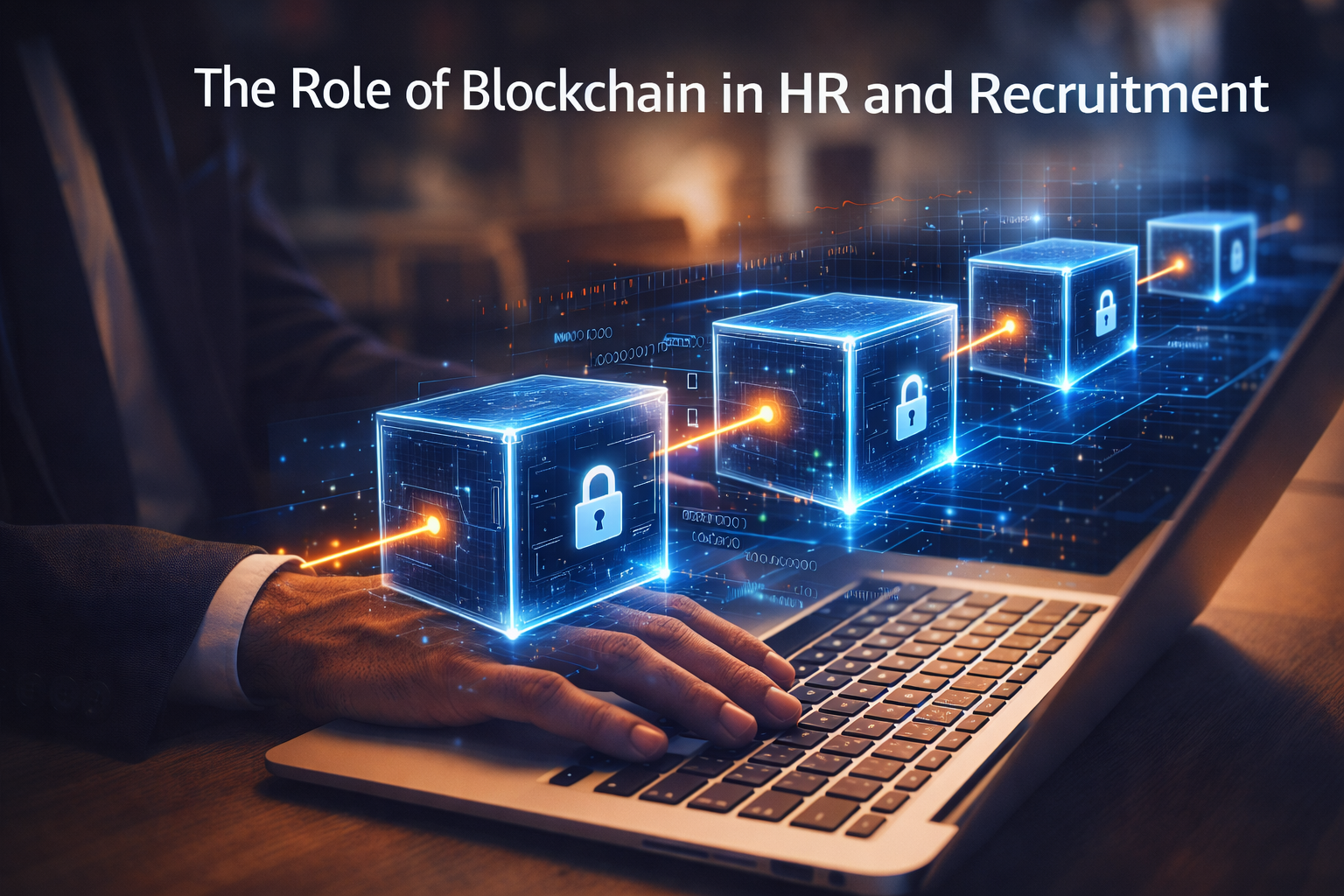
“Technology is continuously transforming Human Resource management, and one of the emerging technologies that is gaining attention in HR and recruitment is blockchain. While blockchain is mostly known for its use in cryptocurrency, its applications go far beyond digital currency. In HR and recruitment, blockchain technology has the potential to improve data security, reduce hiring fraud, simplify background verification, and create more transparent HR processes.
Blockchain is a decentralized digital ledger that stores data in secure and tamper-proof blocks. Once information is recorded in the blockchain, it cannot be easily changed or deleted. This makes blockchain very useful for storing sensitive HR data such as employee records, educational certificates, work experience, and payroll information.
One of the biggest problems in recruitment is resume fraud. Many candidates provide false information about their education, experience, or skills. HR teams spend a lot of time verifying candidate documents and experience letters. With blockchain, educational certificates, work history, and professional certifications can be stored in a secure digital format that can be verified instantly. Recruiters can check candidate information quickly and accurately, which reduces hiring time and improves hiring quality.
Blockchain can also improve background verification. Background verification is an important part of recruitment, but it is often slow and expensive. Blockchain allows verified data to be stored securely and shared with authorized organizations. This makes background verification faster and more reliable.
Another important use of blockchain in HR is secure employee data management. HR departments store sensitive employee information such as personal details, salary records, tax information, and performance data. Blockchain technology can store this data securely and allow access only to authorized users. This reduces the risk of data breaches and unauthorized access.
Blockchain can also be used in payroll management, especially for international employees. Companies that have employees in different countries often face problems related to currency conversion, payment delays, and bank charges. Blockchain-based payment systems can make international salary payments faster and more secure.
Smart contracts are another important feature of blockchain technology. Smart contracts are digital contracts that automatically execute when certain conditions are met. In HR, smart contracts can be used for employment contracts, freelance contracts, and payment agreements. For example, a smart contract can automatically release payment when a freelancer completes a project.
Blockchain can also improve transparency in HR processes. For example, promotion records, performance evaluations, and training records can be stored in blockchain systems, which makes the process more transparent and fair.
Despite its advantages, blockchain in HR also has some challenges. One of the main challenges is the cost of implementing blockchain technology. Many organizations may find it expensive to implement blockchain systems. Another challenge is the lack of awareness and technical knowledge about blockchain in HR departments.
There are also legal and regulatory challenges because blockchain is still a new technology, and many countries do not have clear regulations for blockchain data management. Organizations must ensure that they follow data protection laws when using blockchain technology.
In the future, blockchain is expected to play a bigger role in HR and recruitment. It can create secure digital employee records, reduce recruitment fraud, automate contracts, and improve payroll systems. Blockchain may also help employees maintain a digital portfolio of their education, skills, and work experience that can be shared with employers easily.”