AI in HR: From Recruiter to Decision-Maker
Human Resources has traditionally been defined by judgment, intuition, and human interaction. From screening resumes to conducting interviews and shaping workplace culture, HR has long been viewed as a deeply human function. Yet, as organizations scale and complexity increases, the limitations of manual decision-making have become more apparent. Today, artificial intelligence is not just supporting HR processes—it is beginning to redefine them. What started as a tool for automation is evolving into a system capable of influencing, and in some cases making, decisions.
The integration of AI into HR began with relatively simple applications. Resume parsing, keyword matching, and applicant tracking systems were designed to reduce administrative burden and speed up hiring workflows. These early tools focused on efficiency, helping recruiters manage large volumes of candidates without fundamentally changing how decisions were made. The recruiter remained at the center, using technology as a support system rather than a substitute.
Over time, however, the capabilities of AI have expanded significantly. Modern systems can analyze not only structured data such as qualifications and experience, but also unstructured data including communication patterns, behavioral signals, and even subtle indicators of cultural fit. Machine learning models can identify patterns across thousands or millions of hiring decisions, uncovering correlations that would be impossible for humans to detect. This has shifted AI from a passive tool to an active participant in the decision-making process.
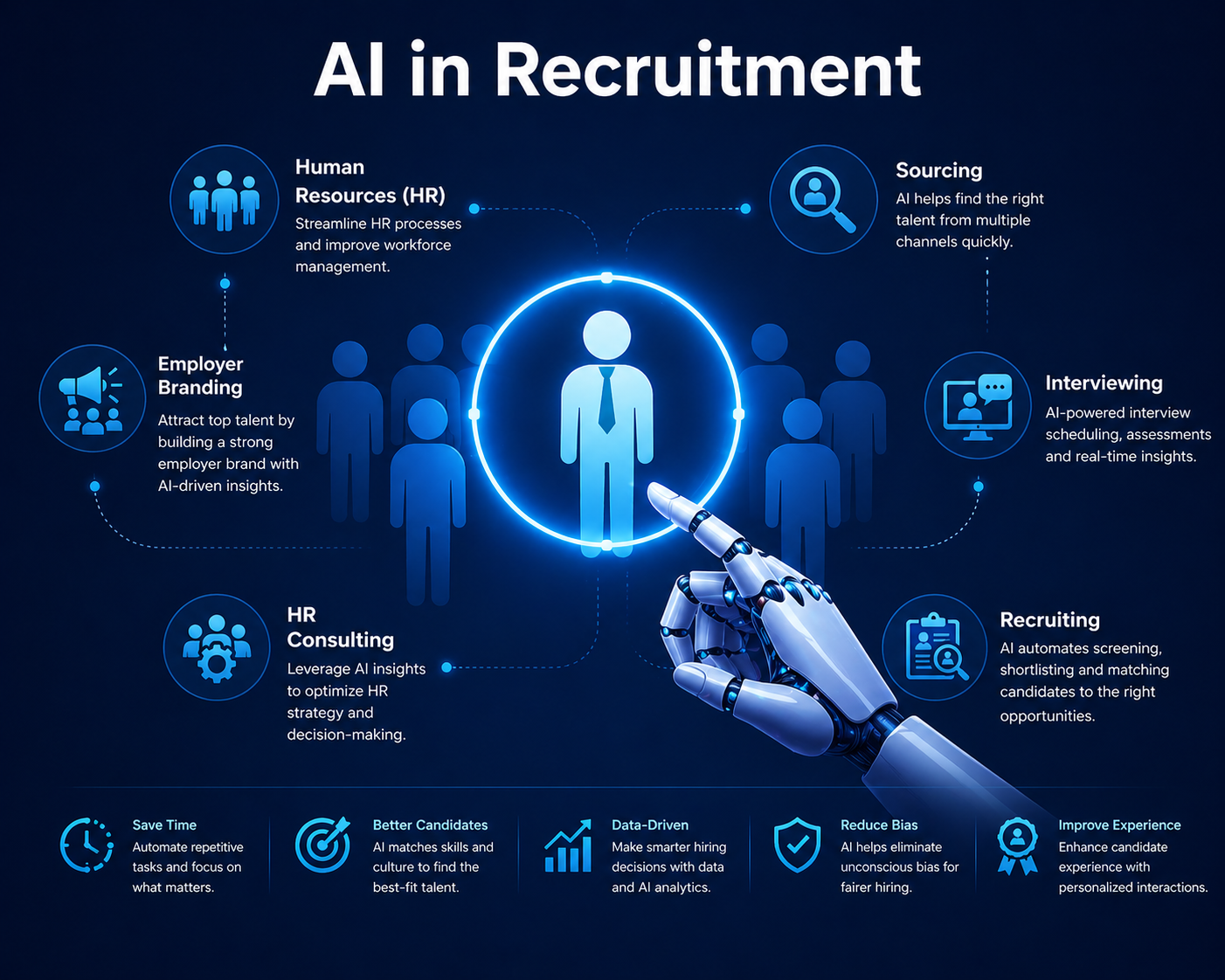
One of the most visible areas of transformation is talent acquisition. AI-driven platforms can now evaluate candidates based on a wide range of factors, from skill alignment and career trajectory to inferred soft skills and potential for growth. Video interview analysis tools assess tone, language, and engagement, while predictive models estimate the likelihood of success in a given role. In many cases, these systems generate shortlists of candidates that are prioritized based on algorithmic scoring, effectively guiding or even determining who moves forward in the hiring process.
This shift raises an important question: where does human judgment fit in a system increasingly driven by data? On one hand, AI offers a level of consistency and scalability that human recruiters cannot match. It reduces bias introduced by fatigue, subjective impressions, or incomplete information. On the other hand, it introduces new risks, particularly if the underlying data or models are flawed. Bias can still exist—only now it is embedded within algorithms, making it less visible and potentially more difficult to correct.
Beyond hiring, AI is reshaping other core HR functions. In performance management, systems can analyze employee output, collaboration patterns, and feedback to provide continuous assessments rather than relying on periodic reviews. In learning and development, AI can recommend personalized training paths based on an individual’s skills, goals, and organizational needs. Workforce planning is becoming more predictive, with models forecasting future skill gaps and suggesting strategies to address them.
Perhaps the most significant transformation lies in decision-making itself. AI systems are increasingly capable of not just providing insights, but recommending actions. In some cases, these recommendations are automatically implemented, such as adjusting job postings, reallocating resources, or triggering employee engagement initiatives. This marks a shift from decision support to decision automation, where the boundary between human and machine responsibility becomes blurred.
The appeal of this approach is clear. Organizations operate in environments that demand speed, precision, and adaptability. AI can process vast amounts of data in real time, enabling faster and more informed decisions. It can identify trends early, respond to changes quickly, and optimize outcomes at a scale that would be impossible through manual processes alone. For HR, this means moving from a reactive function to a proactive and strategic one.
However, the transition to AI-driven decision-making is not without challenges. Trust is a central issue. Employees and candidates need to feel confident that decisions affecting their careers are fair, transparent, and accountable. If AI systems are perceived as opaque or arbitrary, they can undermine trust and damage organizational culture. Ensuring explainability—making it clear how and why decisions are made—is therefore essential.
Ethical considerations are equally important. The use of AI in HR involves handling sensitive personal data, from employment history to behavioral insights. Organizations must ensure that this data is collected, stored, and used responsibly. Consent, privacy, and security are not just regulatory requirements; they are fundamental to maintaining trust. Additionally, there must be safeguards to prevent discrimination and ensure that AI systems promote diversity and inclusion rather than inadvertently reinforcing existing biases.
Another challenge lies in balancing automation with human empathy. HR is not just about processes; it is about people. While AI can analyze data and identify patterns, it cannot fully replicate the emotional intelligence, empathy, and nuanced understanding that human professionals bring to complex situations. Decisions related to hiring, promotion, or performance often have significant personal and social implications. Maintaining a human element in these decisions is critical to ensuring that they are not only efficient but also compassionate and contextually appropriate.
The role of HR professionals is therefore evolving rather than disappearing. As AI takes on more operational and analytical tasks, HR leaders are freed to focus on strategic and interpersonal aspects of their role. They become interpreters of data, stewards of culture, and guardians of ethical standards. Their responsibility shifts from making every decision to overseeing and guiding the systems that make decisions, ensuring alignment with organizational values and objectives.
Looking ahead, the influence of AI in HR is likely to deepen. Advances in natural language processing, behavioral analytics, and predictive modeling will enable even more sophisticated insights and actions. We may see systems that can simulate organizational scenarios, test the impact of different policies, and recommend optimal strategies before they are implemented. The line between human and machine decision-making will continue to blur, creating both opportunities and challenges.
In this evolving landscape, the question is not whether AI will become a decision-maker in HR, but how organizations will manage that transition. Success will depend on building systems that are not only intelligent but also transparent, ethical, and aligned with human values. It will require a thoughtful balance between automation and oversight, efficiency and empathy, data and judgment.
AI in HR represents a shift from intuition-driven processes to data-informed decision-making. It offers the potential to enhance fairness, improve efficiency, and unlock new levels of insight. At the same time, it demands a rethinking of roles, responsibilities, and ethical frameworks. As organizations navigate this transformation, the goal should not be to replace the human element, but to augment it—creating a future where technology and humanity work together to make better decisions.